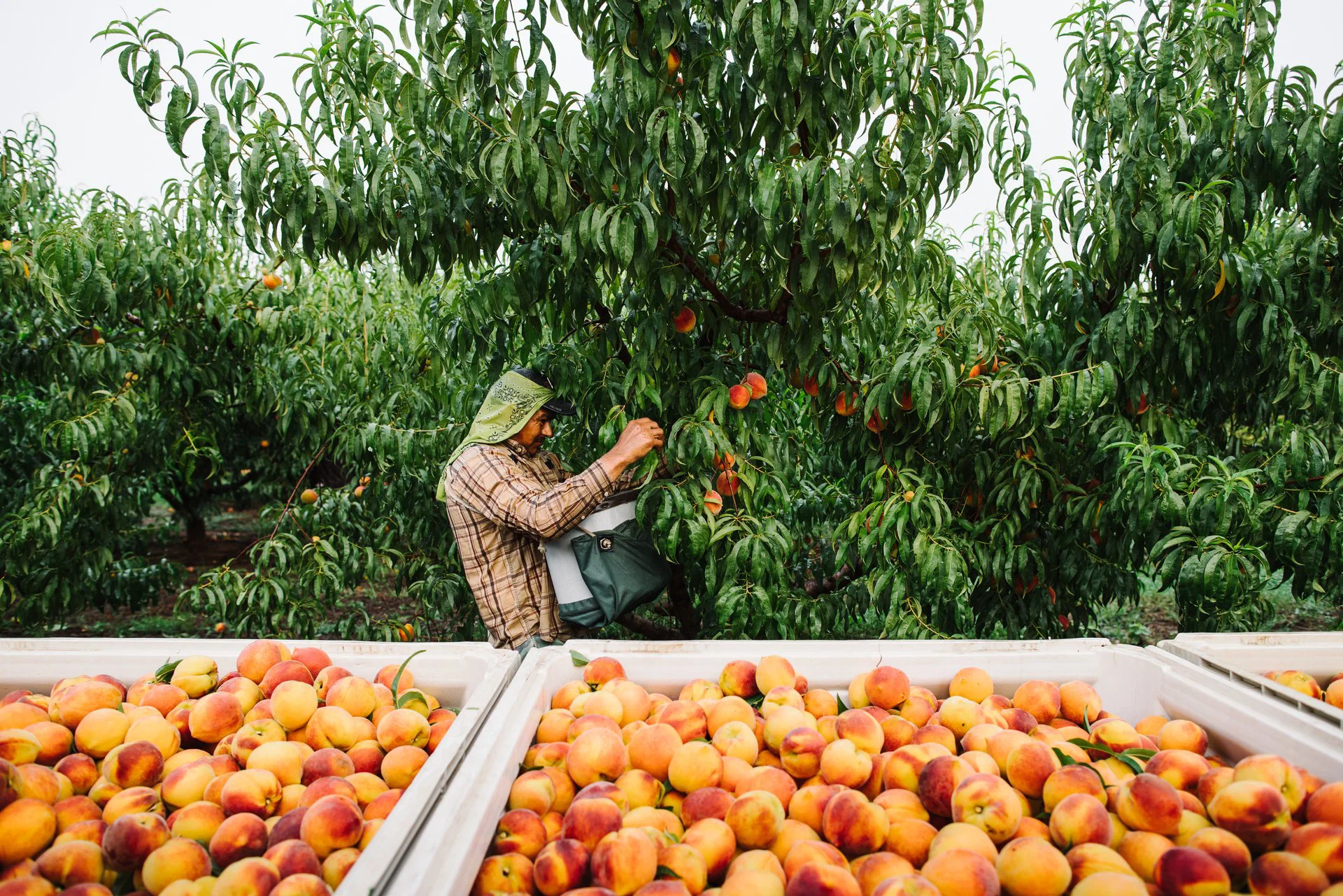
If you’ve ever grown peaches here in California, you know harvest is one of the most critical and unpredictable times of the year. Whether you’re packing fresh fruit for the market or sending clings to the cannery, timing and execution can make or break your season. Fruit quality can shift overnight, labor gets tight quickly, and even a short delay can take a big bite out of your returns.
For growers, success starts long before the first bin hits the row. Getting the orchard ready, planning for labor, dialing in irrigation, thinning, lining up trucks, and making sure your post-harvest plan is set are the things that separate a smooth harvest from a stressful one. Doesn’t matter if you’re running a few acres with family or moving fruit off hundreds of acres; having the right support lined up early can save a lot of headaches.
California Peach Harvest Season
California produces peaches across multiple growing regions, with especially strong production in the Central Valley, where warm days and long growing seasons help drive quality and volume.
Harvest timing varies by region, weather, and variety, but generally follows this schedule:
- Early varieties: May to June
- Mid-season varieties: June to July
- Late varieties: July to September
- Cling peaches for processing: Summer harvest windows typically depend on contracts and maturity timing.
Most growers end up making several passes through each orchard, depending on how the fruit ripens, what the market is looking for, and how the sizing is coming along.
Main Types of California Peaches
California growers may produce several categories of peaches, each with distinct harvest needs and market demands.
Yellow Flesh Peaches
Popular for fresh market sales, with classic peach flavor and broad consumer demand.
White Flesh Peaches
Often sweeter, with lower acidity, and common in premium fresh markets.
Freestone Peaches
Fruit separates easily from the pit; common in fresh market channels and direct sales.
Clingstone Peaches
Fruit clings to the pit and is widely used for canning and processing markets.
Donut Peaches
Flat-shaped specialty peach varieties are often sold at premium pricing.
Nectarines
Though technically distinct, nectarine harvest often overlaps with peaches operationally and uses similar labor planning.
Pre Harvest Orchard Preparation
A good harvest starts months before anyone picks a peach. Getting the orchard ready means crews can move fast and your fruit stays in top shape.